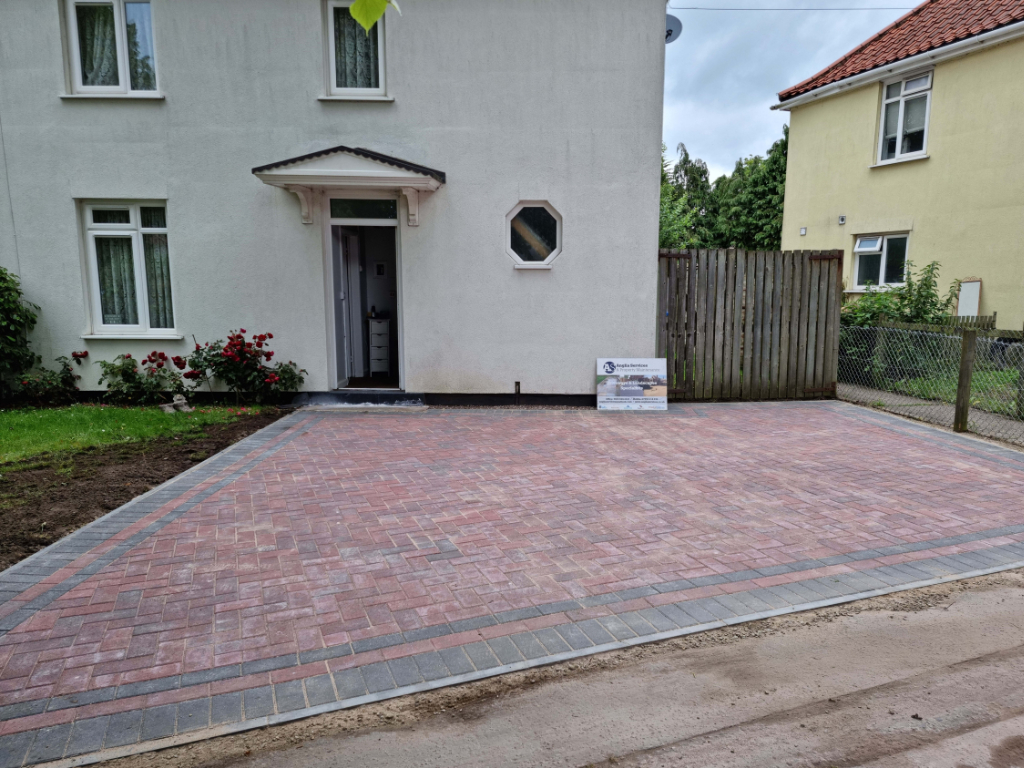
Why Is the Foundation Important for Every New Driveway?
The Hidden Construction That Determines Driveway Performance
The finished surface may be the most visible part of a new driveway, but its long-term performance depends heavily on the foundation beneath it. Resin-bound aggregate, block paving, tarmac and other surfacing materials all require stable support to carry vehicle loads and maintain consistent levels.
An attractive surface laid over weak, poorly compacted or unsuitable ground can begin to crack, sink or move. For homeowners in Tunbridge Wells, Kent, professional ground preparation is therefore just as important as selecting the final driveway material.
What Forms the Foundation of a Driveway?
A driveway foundation normally consists of several prepared layers rather than a single base. The precise construction depends on the ground conditions, expected traffic, drainage requirements and chosen surface.
The main elements may include:
- Prepared subgrade
- Separation or reinforcement materials where required
- Compacted sub-base
- Binder or base layer suited to the surface
- Edge restraints
- Drainage features
- The finished driveway covering
Each part performs a specific function. Together, they create a stable platform that spreads vehicle loads and supports the surface above.
Why the Existing Ground Must Be Assessed
Ground conditions can vary considerably, even across a single driveway. Some areas may be firm and well drained, while others contain soft soil, disturbed material or old construction debris.
Before work begins, the site should be assessed for:
- Soft or unstable ground
- Previous areas of settlement
- Organic material
- Poorly filled excavations
- Tree roots
- Existing drainage problems
- Changes in ground level
- Unsuitable remains from an older driveway
If weak material is left beneath the new construction, it may compress under regular vehicle use. This can cause localised sinking that eventually becomes visible at the surface.
The Importance of Correct Excavation
Excavation creates the space needed for the foundation and finished surface. The required depth should be based on site conditions and the type of traffic the driveway will receive.
Removing too little material can leave an insufficient depth for the supporting layers. Excavating unevenly can also produce variations in strength across the driveway.
A professionally prepared formation should provide consistent levels while allowing for the planned surface thickness, drainage falls and connections to paths, entrances and adjoining areas.
How the Sub-Base Distributes Vehicle Loads
The sub-base spreads the weight of vehicles across a broader area. Without this support, concentrated loads from tyres can place excessive pressure on the ground directly below them.
This is particularly important where vehicles regularly park, turn or follow the same route. These repeated movements can expose weak sections more quickly than occasional use.
A suitable sub-base should be installed evenly and compacted in controlled layers. Simply tipping material into the excavation and compacting only the surface may leave voids or loose areas underneath.
Why Compaction Matters
Compaction brings the foundation material together to create a dense and stable layer. If the material is not compacted thoroughly, it may continue to settle after the driveway is in use.
Signs of inadequate compaction can include:
- Sunken wheel tracks
- Localised depressions
- Cracks across the surface
- Loose or rocking paving blocks
- Water collecting in newly formed low areas
- Edges breaking away
- Uneven transitions to paths or entrances
The correct equipment and method should be used for the material, depth and available working area. Consistent compaction across the complete driveway helps prevent differential settlement.
How Drainage Relates to the Foundation
Water is one of the main factors that can weaken driveway construction. If it becomes trapped within the supporting layers, it may soften the ground, move fine material and reduce the stability of the base.
Effective drainage begins below the finished surface. The foundation must be constructed with suitable levels and compatible materials so water can move in the intended direction.
Drainage planning should consider:
- The natural slope of the site
- Where rainwater currently collects
- Connections with surrounding ground
- Surface falls
- Channels and outlets where needed
- Whether the selected driveway system is permeable
- Levels around buildings and entrances
A surface described as permeable will only manage water effectively if the complete construction beneath it has been designed to support drainage.
Why Resin-Bound Driveways Need a Suitable Base
Resin-bound surfacing forms a smooth layer of aggregate mixed with resin, but it is not intended to correct movement beneath the driveway. The base must be stable, clean and appropriate for the chosen system.
If resin is installed over a cracked, sinking or unsuitable surface, defects from below may eventually become visible above. Movement can produce cracking, while poor levels may encourage water to collect.
For a permeable resin-bound driveway, the supporting construction must also allow water to pass through effectively. The surface and foundation therefore need to be planned as a complete system.
Edge Restraints Are Part of the Foundation
Driveway edges help contain the supporting layers and maintain the shape of the finished surface. Weak or poorly secured boundaries can allow materials to spread sideways under vehicle loads.
Reliable edge restraints also provide clean transitions between the driveway, lawn, planting beds and paths. They should be installed at the correct level and supported firmly before the main surface is completed.
Can an Existing Base Be Reused?
Some existing driveway bases can be retained, but only if they are stable, correctly constructed and compatible with the proposed surface. Visual appearance alone is not enough to determine suitability.
An assessment should establish whether the existing base:
- Shows signs of settlement
- Contains widespread cracking
- Has suitable levels
- Drains effectively
- Is strong enough for regular vehicle use
- Provides the correct surface for the new material
- Remains stable at the edges
Covering an unsuitable base may hide problems temporarily, but it will not remove the underlying cause.
The Value of Professional Preparation
A properly built driveway begins with an assessment of the complete site. Professional contractors consider the ground, traffic demands, drainage and surfacing material before determining the necessary excavation and base construction.
This approach helps ensure that the foundation is appropriate for the individual property rather than relying on a standard method without considering local conditions.
Conclusion
The foundation is essential because it carries vehicle loads, maintains levels and protects the finished driveway from movement. Correct excavation, suitable sub-base material, thorough compaction and effective drainage all contribute to dependable performance.
Even a high-quality surface can deteriorate if the construction beneath it is weak. If you are planning a new driveway in Tunbridge Wells, Kent, Resin Drives Tunbridge Wells can assess the site and recommend a suitable foundation and surfacing system. Contact the team to arrange a professional consultation.
Call us on: 01892 481881
Click here to find out more about Resin Drives Tunbridge Wells
Click here to complete our contact form and see how we can help with your driveway needs.